
X-Ray Servicing & Testing
Dental X-rays
Dental X-ray machines are an essential part of modern dentistry, helping clinicians see what isn't visible during a routine examination. They produce detailed images of your teeth, jaw and surrounding structures, allowing dental professionals to diagnose problems early and plan the most effective treatment.
A typical dental X-ray system consists of an X-ray unit, a digital sensor or imaging plate, and an easy-to-use control panel. During an examination, the X-ray unit safely directs a small amount of radiation towards the area being scanned. The resulting image is captured digitally, providing clear, high-quality results within seconds.
There are several types of dental X-ray machines, each designed for a different purpose:
- Intraoral X-ray Machines – Ideal for capturing detailed images of individual teeth or small areas of the mouth. These are commonly used to detect tooth decay, infections, bone loss and other everyday dental concerns.
- Panoramic X-ray Machines – Produce a single image of the entire mouth, including the teeth, jaws and surrounding structures. They're often used for treatment planning, orthodontics and wisdom tooth assessments.
- CBCT (Cone Beam Computed Tomography) – Provides highly detailed 3D images of the teeth, jawbone, nerves and facial structures. CBCT scans are invaluable for dental implants, oral surgery, endodontics and complex diagnoses.
At Blackdown Dental, we supply and install high-quality dental imaging systems from leading manufacturers, helping practices improve diagnostics, streamline workflows and deliver exceptional patient care. Whether you're replacing an existing X-ray unit or investing in the latest digital imaging technology, our team can help you find the right solution for your practice.
X-ray Servicing
Regular servicing keeps your dental X-ray equipment safe, reliable and compliant with current regulations.
Annual Servicing helps maintain image quality, reduce downtime and ensure your system continues to perform at its best.
A typical service includes mechanical and electrical safety checks, performance testing and the documentation required to demonstrate compliance with CQC expectations.
Blackdown Dental provides expert servicing and maintenance for a wide range of dental X-ray systems, helping practices stay compliant and ensuring their imaging equipment delivers accurate, high-quality results every day.
Contact our office to find our more.
Critical Examination
A Critical Examination is separate from your routine service and is required under IRR17 and IR(ME)R to ensure your dental X-ray equipment remains safe and compliant.
Critical Examinations are required:
- Wall-mounted intraoral and panoramic (OPG/CEPH) units – Every 3 years, or following relocation or the replacement of a major component.
- Handheld X-ray units – Annually.
- CBCT units – Annually, or following the replacement of a major component. This can be extended to every 3 years where a documented in-house quality assurance programme is in place.
Blackdown Dental can carry out your Critical Examination, providing the certification and documentation needed to help keep your practice compliant.
Why does dental x-ray equipment require testing?
In short, to ensure it is safe for staff and patients and will produce high quality images.
The Ionising Radiations Regulations requires testing of new equipment to be undertaken to ensure there are no issues (such as poor shielding, faulty timers, etc).
The Ionising Radiation (Medical Exposure) Regulations (IRMER for short) requires initial and routine testing to ensure that performance is maintained and the equipment continues to operate safely and effectively:
- For intra-oral, panoral and cephalometric machines this should be undertaken every 3 years
- For handhelds it is recommended this is undertaken annually
- For CBCT, this should be undertaken annually (unless the practice are undertaking tests using the manufacturer’s QA phantom and the machine is subject to servicing, in which case every 3 years is appropriate)
Testing is therefore important to ensure radiation safety, legal compliance, diagnostic accuracy and equipment reliability.
We partner with our Dental Radiation Protection Adviser & Medical Physics Expert CompleteRPA to provide critical examination and acceptance tests and routine QA tests of dental x-ray equipment.
Get in touch with us to discuss our x-ray equipment testing services further.
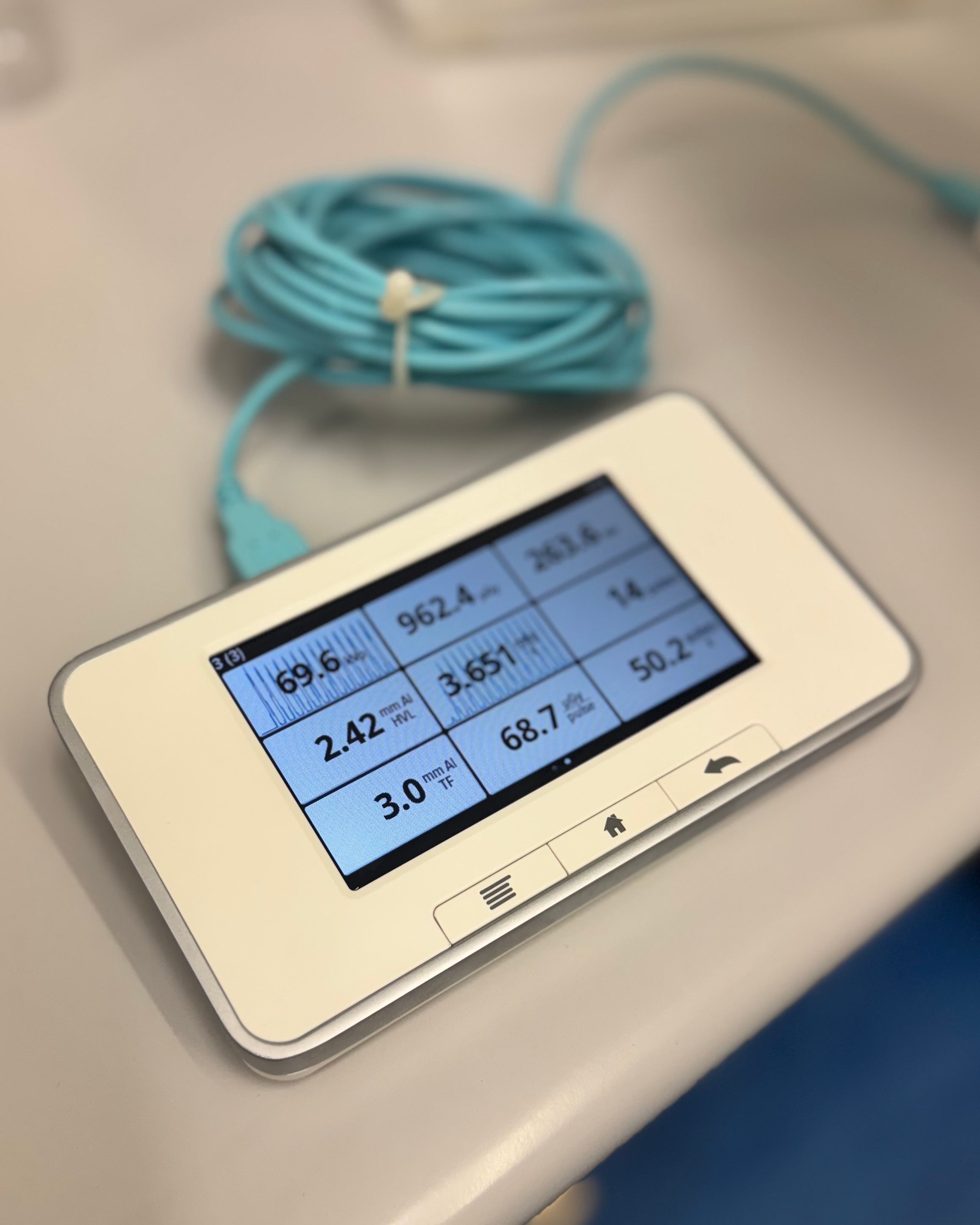
The Ionising Radiations Regulations (IRR) are statutory instruments which form the main legal requirements for the use and control of ionising radiation in the United Kingdom.
Blackdown Dental work closely with a radiation protection adviser (RPA) and medical physics expert (MPE) to comply with IRR17 to carry out inspections from the point of installation to annual service checks to ensure you comply in the safe use of your X-ray equipment.
Our engineers are able to carry out Critical examinations and acceptance testing on your behalf before X-ray equipment is put into clinical use. We also offer routine and annual testing including repair.
We can help you to comply with the regulations and also ensure radiation is kept as low as reasonably practicable (ALARP) whilst remaining within the national diagnostic reference levels (NDRL’s) as published by the UK Health Security Agency (UKHSA).
Guidance Notes for Dental Practitioners on the Safe Use of X-ray Equipment (2nd Edition)
5.2 QA programme for X-ray equipment
The employer is required by IRMER17 to establish a QA programme, in consultation with the MPE, to ensure that equipment remains capable of the adequate restriction of patient dose.
The QA programme must include the following:
- An inventory of all dental X-ray equipment and ancillary equipment which would influence the dose to the patient
- Adequate testing before the first clinical use (commonly known as ‘acceptance testing’)
- Routine retesting at appropriate intervals and following any major maintenance
- In-house checks where appropriate (see sections 5.2.4 and 5.2.5)
- Representative measurements of patient dose
- Remedial and suspension levels for action
It should be noted that IRR17 also requires the employer to have a QA programme for the maintenance and examination of engineering controls; guidance on this is set out in section 2.20.
5.2.2 Adequate testing IRMER17 requires the employer to undertake adequate testing (‘acceptance testing’) before X-ray equipment is put into clinical use. The purpose of this is to confirm that the equipment is operating correctly and is capable of the adequate restriction of patient dose. Installers often provide acceptance testing on behalf of the user at the same time as the critical examination (required under IRR17), and employers should confirm with the installer that both the critical examination and acceptance test will be carried out, and a report of the results provided, before clinical use commences. If this is not the case, the employer should consult its MPE regarding alternative arrangements (see sections 2.9, 3.7 and 6.1).
5.2.3 Routine testing and tests after repairs or modifications
Routine tests should normally be carried out at intervals not exceeding three years, except in the following circumstances where annual testing is recommended, subject to the advice of the practice’s MPE:
- Patient doses consistently exceed the relevant NDRL despite previous recommendations to reduce the dose
- Image quality analysis indicates a persistent failure to meet the targets specified in section 5.4.1 (or other targets set in consultation with the practice’s MPE where appropriate)
- For dental CBCT eqipment, where no suitable QA test object (see Appendix I2) is available
- For hand-held dental X-ray equipment, in all cases
Annual testing should be maintained until the MPE advises that acceptable performance has been restored or achieved.
Testing should also be carried out following any repairs or modification of the equipment that could significantly affect image quality or patient doses. Examples include:
- Relocation of X-ray equipment (including re-installation in the same location, e.g. following surgery refurbishment)
- Replacement of the X-ray tubehead or other important feature which will affect radiation dose
- Upgrading of existing equipment to include additional modalities, e.g. of panoramic equipment to introduce cephalometric or dental CBCT capability (even if this involves purely a software upgrade)
If in doubt, the MPE should be consulted regarding the need for, and scope of, any testing following repairs or modification. The potential need for a critical examination should also be considered by the person installing, repairing or upgrading the equipment, who should consult their RPA on this matter (see section 2.9).
Appendix I details the recommended content of acceptance tests, routine tests and tests after repair or modification and the relevant action levels and suspension levels.